






Located in the north-western part of Umbria, on the border with neighbouring Tuscany, Lisciano Niccone is a small village nestled along the valley of the Niccone stream, straddling the scenic route connecting the Tiber Valley, Lake Trasimeno and the Valdichiana. Surrounded by hills covered with oak forests, secular olive groves and cultivated fields, this village offers an oasis of peace, far from the busiest tourist routes, where unspoilt nature blends with outstanding historical heritage.
A Land of Borders and Fortresses
The history of Lisciano Niccone is inextricably linked to its geographical position on the border. Inhabited since ancient times, as evidenced by the Etruscan and Roman archaeological finds discovered in the area, it assumed the role of an important strategic location after the fall of the Roman Empire, thanks to the Byzantine Corridor, the main route connecting Rome and Ravenna. Traces of this route can still be found in the surrounding castles and fortresses. Later, the area became a bone of contention among local powers: the Commune of Perugia, the city of Cortona, the Papal States and the Grand Duchy of Tuscany.
After submitting to Perugia in 1202, the fortified village of Lisciano continued to experience strategic and military disputes, including its occupation by Uguccione Casali, Lord of Cortona, and the subsequent negotiations undertaken by Perugia to regain control of it.
To defend the communication routes crossing the Niccone stream valley, the area was fortified with a dense network of castles and watchtowers. This identity as a “frontier land” shaped the local culture and rural layout for centuries, leaving behind a fascinating architectural heritage.
From 1479 onwards, the area became part of the Papal States as a border territory with the Republic of Florence, remaining under papal rule until 1861, when it was annexed to the Kingdom of Italy.
Exploring the Artistic and Cultural Treasures of Lisciano Niccone
The Castle of Lisciano, built around the 9th–10th centuries, is certainly worth a visit. Perched on a hill overlooking the village, it preserves the remains of the medieval fortified structure. Its elevated position offers sweeping panoramic views across the entire valley.
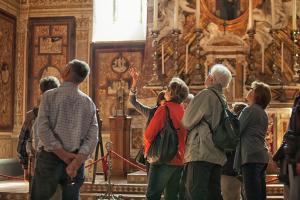
Also in the village centre, a visit to the beautiful Church of San Nicolò is highly recommended. Inside, it houses valuable works of sacred art, including an altarpiece attributed to Eusebio da San Giorgio, a pupil of Pietro Perugino. The Church of San Tommaso, originally dating back to the 14th century but substantially altered after the second half of the 16th century, is also worth visiting, as is the Church of Santa Maria delle Corti.
Around the Village
In the surroundings of Lisciano Niccone, visitors can admire Reschio Castle, an imposing and elegant 11th-century fortress, beautifully restored and transformed into a luxury estate and a centre of excellence for equestrian activities and high-end hospitality, as well as Pierle Castle, a romantic medieval ruin immersed in lush vegetation.
A must for trekking and cycling enthusiasts is Gosparini Pass. As you cross this scenic pass, the landscape suddenly opens up to reveal the waters of Lake Trasimeno and the surrounding hills, offering one of the most spectacular views in the entire area.
Lisciano Niccone’s geographical position also makes it an ideal starting point for day trips combining art, nature and history. Destinations include Lake Trasimeno, just 10–15 km away, with its equipped beaches, cycling routes and boat connections to Isola Maggiore and Isola Polvese, as well as charming villages such as Tuoro and Passignano sul Trasimeno. Alternatively, visitors can head towards the town of Umbertide, dominated by its 14th-century fortress and surrounded by medieval abbeys and hermitages, such as the Abbey of San Salvatore di Monte Corona, or explore the Upper Tiber Valley.
Outdoor Activities and Gastronomy
The area around Lisciano Niccone is an extraordinary natural haven. With its clear streams, shaded nature trails, and wholesome local cuisine, the area offers visitors an authentic taste of a largely unspoilt rural landscape.
It is an ideal destination for trekking, gravel cycling and mountain biking enthusiasts, thanks to its extensive network of unpaved trails and quiet scenic roads winding through the woods.
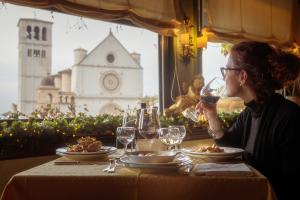
The local cuisine brings together the culinary delights of Umbrian and Tuscan traditions: traditional cured meats, fresh pasta with porcini mushrooms and truffles, prized extra virgin olive oil, and the renowned wines of the Colli del Trasimeno.


